

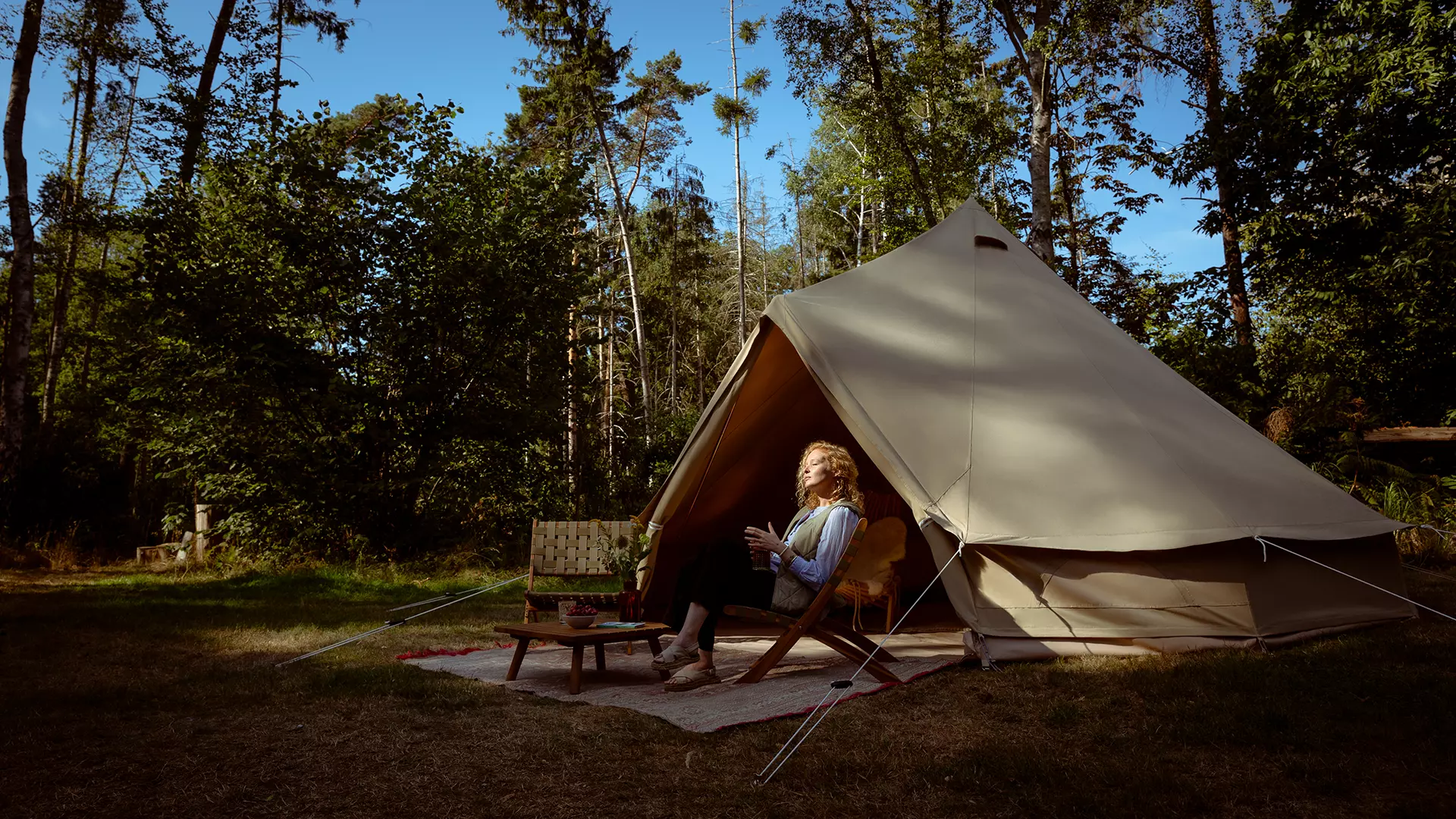
Bell tent waterproof: will my bell tent leak?
The first serious downpour of the season is the real test. Guests are inside, the rain is coming down sideways, and you find out exactly how your accommodation performs. For campsite and glamping operators, that leads to a practical question long before any purchase is signed off: is a bell tent waterproof, and will it stay that way after a few seasons outdoors?
Canvas behaves differently from synthetic tent fabric and understanding that difference is what separates a dry season from a season of complaints. Below we go through what actually keeps a tent dry, why canvas sometimes gets blamed for problems it did not cause, and what to look for when you are comparing suppliers.

What makes a bell tent waterproof?
A bell tent waterproof enough for commercial use comes down to four things: the fabric, the treatments applied to it, the way the tent is constructed, and the shape of the roof itself.
Fabric weight is the starting point. OSSO® tents are made from 320 to 430 gr/m² poly-cotton with reinforced ripstop, a composition that combines tensile and tearing strength with breathability. That last part matters more than people expect, because a fabric that cannot breathe traps moisture inside instead of keeping it out.
The treatments do the rest of the work. UV-resistance stops the sun from breaking down the fibres, which is what causes older canvas to lose its water resistance over time. Anti-mildew treatment prevents moisture from settling into the weave and degrading the material from the inside. Both are standard across the OSSO® range, and both are available in a PFAS-free version, which is unique in this industry.
The bell shape helps too. A steep, single-peak roof sheds water quickly rather than letting it collect, which is exactly what you want during heavy or prolonged rainfall.

Will my bell tent leak?
Will my bell tent leak? In most cases, no, and when moisture does appear inside, the fabric is often not the cause. Three situations account for the majority of reports.
Condensation. Warm, humid air from breathing, cooking or wet clothing meets cool canvas overnight and turns into droplets. It looks like a leak but behaves differently: it appears evenly across the inside of the roof rather than at a specific point. Ventilation solves it.
Contact points. Anything pressed against the inside of wet canvas, such as a mattress, a stored chair or a bag, can draw moisture through the weave at that spot. Keeping furniture clear of the walls prevents it.
Tension and pitching. A tent that is not properly tensioned develops slack areas where water pools instead of running off. Once water sits still on canvas, it will eventually find a way through. Correct pegging and periodic re-tensioning during the season deal with this.
Genuine fabric failure is rare with a well-treated canvas tent and usually points to age, poor material quality or damage rather than a design fault. If you want the fuller picture on how long the material holds up, we covered that in our blog on safari tents durability.

Safari tent waterproof: larger structures, different demands
Keeping a safari tent waterproof involves the same principles at a bigger scale, with one addition: structural engineering starts to carry real weight.
Larger spans mean more surface area for wind and rain to act on, and more places where a poorly designed frame allows the canvas to sag. OSSO designs and engineers all tent structures in-house, with structural analyses performed to EN, DIN and ISO standards and windspeed limitations calculated for the location. A frame that holds the fabric under even tension in a storm is a direct contributor to keeping a safari tent waterproof, not a separate concern.
The details matter at this scale as well. YKK heavy-duty zippers and reinforced pegging points come as standard across the range, because these are the components that fail first on cheaper structures and take the weatherproofing down with them.
Keeping a semi-permanent tent waterproof season after season
A semi-permanent tent stays up for months at a time, which changes what maintenance looks like. The work is straightforward, but it needs to happen.
- Re-tension the canvas periodically, especially after storms and during dry spells when fabric relaxes
- Keep the roof clear of leaves and debris, which hold moisture against the fabric
- Check zippers, seams and pegging points at the start and end of every season
- Clean gently and let the canvas dry fully before storage, never pack it damp
- Inspect for small tears early, since ripstop limits the spread but does not repair itself
Handled consistently, this keeps a semi-permanent tent waterproof for years rather than seasons.
Osso tentsOSSO® Outdoor Fabrics
Developed by our in-house development and innovation team, OSSO® Outdoor Fabrics have the perfect balance between fabric weight and durability.
Discover

Engineered for the weather it will actually face
OSSO tests every structure in factories, in laboratories and in the field, because those are the conditions the tents have to perform in. Sourcing directly from the manufacturer and controlling the full production chain is what allows us to guarantee the same quality across every tent we deliver.
Wondering which model suits your site and the climate it sits in? Get in touch and we will talk you through the options.