

Can you leave a bell tent up all year round?
Late October, the last guests have gone and you are looking at twenty tents on a quiet field. Taking them down costs days of labour and storage space you may not have, plus the same work in reverse next March. Leaving them standing means they face a winter nobody booked them for.
The usual advice is to take the tent down, and for a leisure tent that advice is right. It was written about a tent a family buys for summer weekends, not about accommodation on a commercial site. Those are two different products and they give two different answers.
Below we go through where the difference lies, what a winter actually does to canvas that stays up all year round, and what to establish before you decide either way.
Can a bell tent stay up all year?
Can a bell tent stay up all year? That depends on which kind of tent you mean, and the distinction matters more than anything else here.
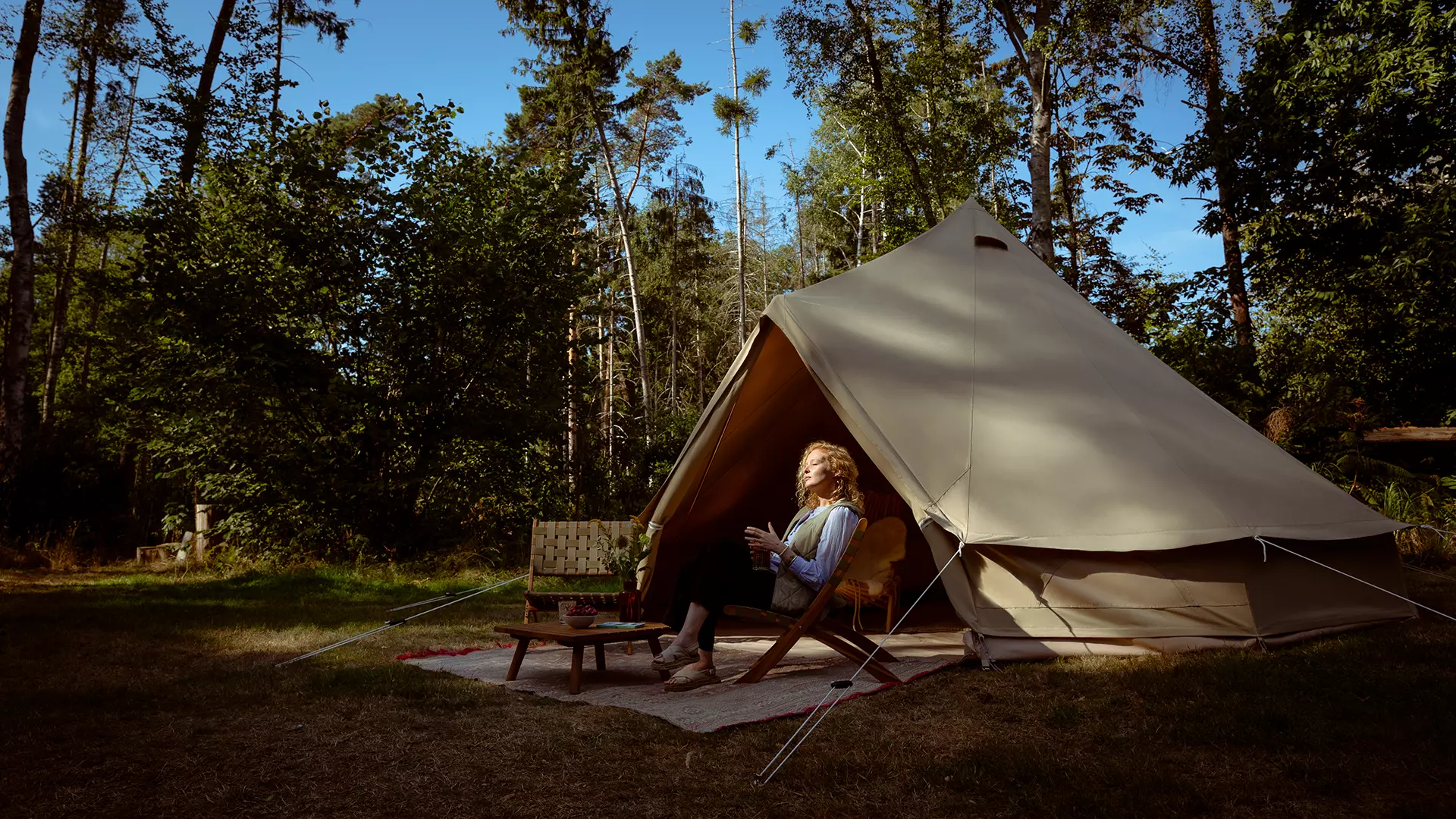
A leisure tent is built for holiday camping, with an intended pitching time measured in days or weeks rather than months. Leave one standing through a wet winter and the risk of mould rises sharply, and the usable life of the canvas shortens with it. The tent is not failing when that happens. It is being used outside what it was made for.
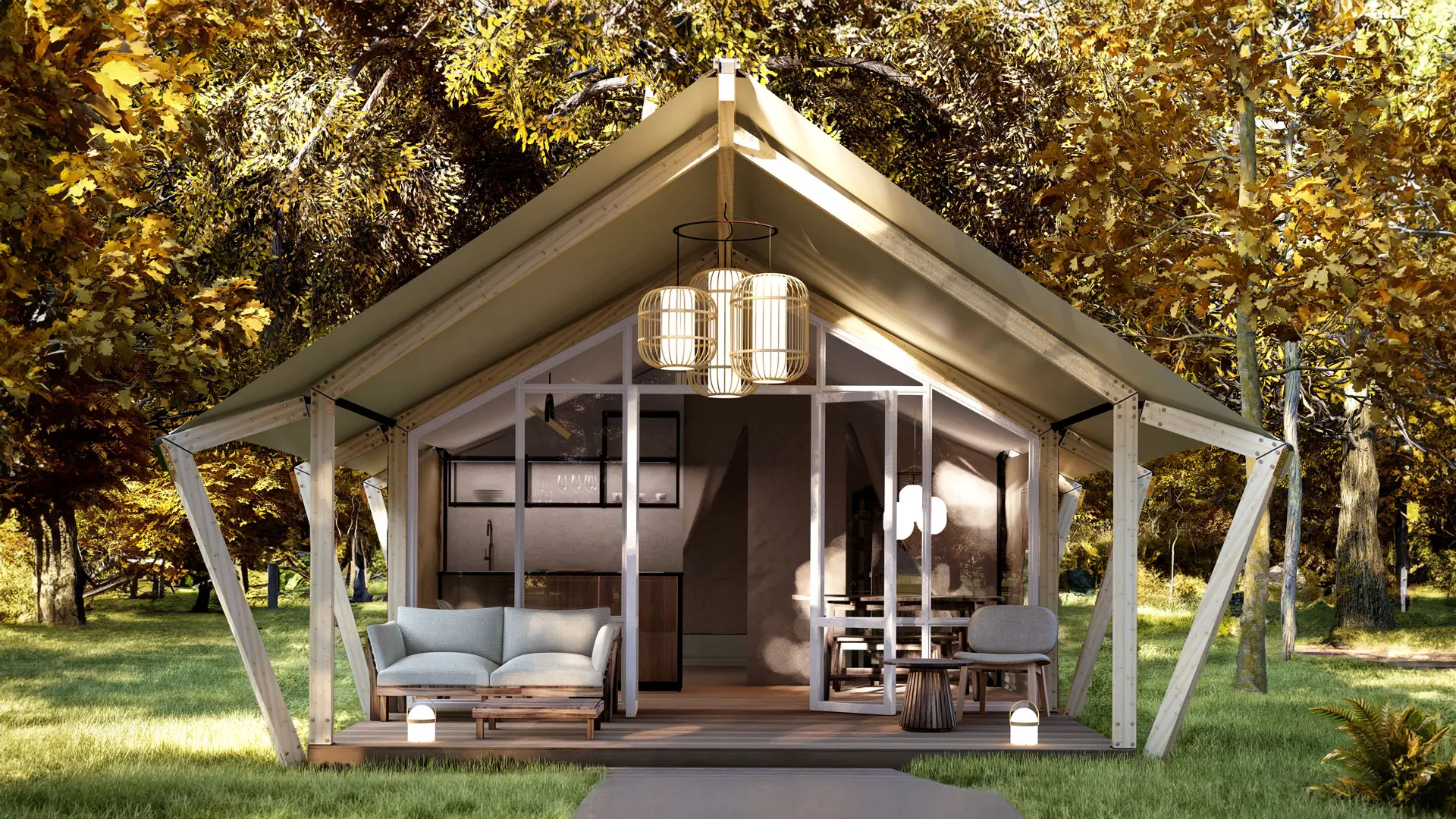
Commercial accommodation sits in a different category. A semi permanent tent is specified to stand continuously, often on a platform or deck, as part of a site that books it out. The fabric, the frame and the maintenance regime all differ from a leisure tent, which is why the answer differs too. The useful question is therefore not whether bell tents in general can stay up, but what your own structure has been calculated for.
What a winter does to canvas that stays standing
Moisture that never gets a chance to leave is the main risk. A tent in use dries out between guests through doors opening, heating and air movement. A closed tent standing empty through a wet December can stay damp for weeks, and that is the condition in which mildew takes hold.
Anti-mildew treatment is standard across the OSSO® range, which is what makes prolonged standing realistic at all. It does not replace ventilation. Opening tents on dry days during the off-season remains the single most effective habit for anyone leaving a bell tent up all year round.
Cumulative UV exposure is the second factor, and it works the opposite way round from what people expect. A tent that stands twelve months a year takes far more sunlight over its life than one that is up for five. UV-resistance and colour fastness grade 7 are what keep that from showing as faded, brittle canvas after a few seasons.
Osso tents
Snow, frost and structural load
Snow changes the engineering question. Wind is a dynamic, mostly horizontal load. Snow is static, vertical and it accumulates, which makes it a separate calculation.
The conical roof helps here for the same reason it helps with rain, since a steep pitch sheds snow rather than collecting it. Wet, heavy snow is the exception, because it clings to canvas and builds up where the slope flattens out near the peak.
Frost adds a smaller issue at ground level. Pegging points in frozen ground cannot be adjusted, and ground that heaves and settles through freeze and thaw cycles will change your tension over the winter.
This is where a calculation beats a rule of thumb. OSSO designs and engineers all tent structures in-house and performs structural analyses to EN, DIN and ISO standards, with limitations calculated for the location where the tent will stand. If you are considering leaving a bell tent up all year round in a region with real snowfall, that is the conversation to have before the first winter rather than after it.
What to establish before you leave a bell tent up all year round
Get the specification in writing. Intended pitching duration, temperature range and snow load are the three figures that matter, and a supplier who engineers their own structures can give you all three for your location.
With a safari tent the question is often already settled. A safari tent is larger, heavier and frequently built on a platform, so striking it is a far bigger job than folding a bell tent. Most safari tent setups are intended as semi permanent from the outset, which makes the winter maintenance regime part of the deal rather than an option.
Whichever route you take, a few habits do most of the work:
- Ventilate on dry days through the off-season, even when nobody is booked in
- Re-tension after storms and during cold dry spells, before the ground freezes
- Clear wet snow from the roof rather than waiting for it to slide off
- Keep the roof free of leaves and debris, which hold moisture against the canvas
- Inspect zippers, seams and pegging points before and after the winter
The semi permanent tent that nobody checks between November and March is the one that gives you problems in spring.
Built for the conditions on your site
OSSO tests every structure in factories, in laboratories and in the field, because those are the conditions the tents have to perform in. Sourcing directly from the manufacturer and controlling the full production chain is what allows us to guarantee the same quality across every tent we deliver.
Thinking about extending your season? Get in touch and we will go through what your site and your climate allow.
Contact